

If you were to look at a typical marketing department mid-quarter, everything would likely appear to be in perfect order. The content calendar is fully populated, the ad spend is pacing exactly as forecasted, and the team is moving with real urgency. Yet if you stepped into the room and asked five different people what the brand stands for, you would likely walk away with five distinct answers.
The issue is rarely a lack of talent or effort. There is confusion between creativity and the core idea. Creativity provides the flair. The core idea provides the anchor. Without that anchor, even the most imaginative work drifts.
Your Content Strategy Is Dying of Competence
Much of the marketing we encounter today is undeniably competent. Headlines that are cleverly written, social posts with clean aesthetics, landing pages that convert just enough to justify their existence. Viewed in isolation, these pieces are entirely defensible. They do the job they were assigned to do.
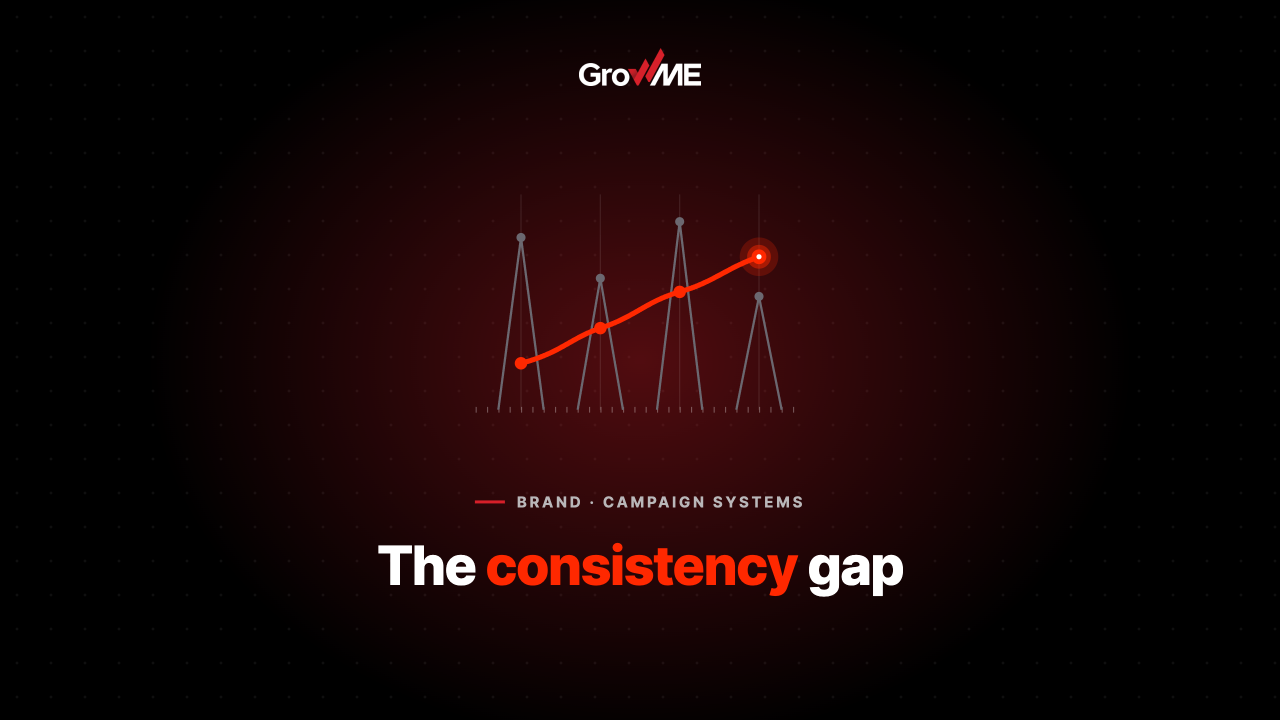
The problem arises when those individual triumphs fail to speak to one another. There is no connective tissue making the brand instantly recognizable across platforms. The BetterIdeas Project, conducted by BetterBriefs and Flood + Partners in partnership with the IPA and the WFA, surveyed 1,034 marketers and agency professionals across 54 countries. It found an execution gap that the industry openly admits to.
An overwhelming majority agree that a strong creative idea is essential. A majority also admit that the work they are currently shipping does not stand out. We are collectively agreeing on the importance of the big idea while struggling to bring it to life in day-to-day workflows.
Our systems are not designed to identify this void. When there is no clear standard for what the work should achieve, teams fall into a cycle of endless iteration. The process is not making the work better. It is making the path to publication slower and more cluttered with compromise.
Synergy Outweighs Channel Selection
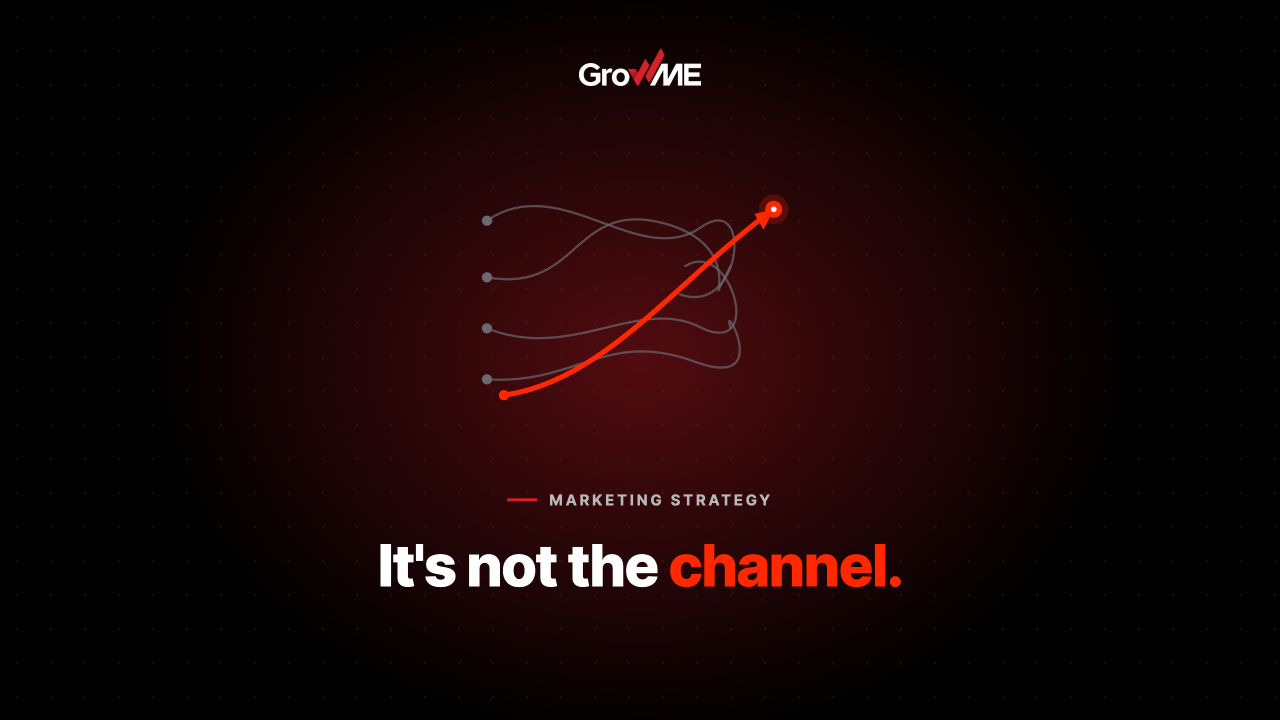
The industry’s intense focus on channel specialization obscures a more important truth about campaign performance. According to Kantar, the power of synergy has more than doubled over the last decade. That compounding effect, where multiple channels work together to amplify a single core idea, now accounts for a far larger share of campaign effectiveness than it did ten years ago.
That figure is worth sitting with, because synergy is not a channel. It is the additional impact created when the same audience meets the same idea across multiple places.
It is tempting to blame the lag on a shortage of creative talent, or on budgets too thin to do the work properly. The simpler explanation is that almost nobody in the modern marketing workflow is responsible for the unifying idea. Workflows are built to produce isolated channel deliverables. Every role has an owner. The thread running between them does not.
The shift itself is driven by media fragmentation. As the number of ways a consumer can interact with a brand has multiplied, the cost of failing to build recognition has grown with it. When a potential customer encounters three messages that feel unrelated, they treat them as three separate claims from three different sources. The brand never builds the familiarity required to earn trust.
Synergy is not a channel. It is what happens when the same audience meets the same idea in several places.
When those touchpoints are united by a single organizing thought, every exposure reinforces the one that came before it. In a market of near-infinite channels, connection has become the largest single lever on campaign performance.
Metrics Up, Memorability Down
Picture a typical mid-sized business where paid acquisition, a steady blog, and organic social all hum along at once, managed by different specialists or vendors. Each channel dutifully hits its independent KPIs. Ads drive clicks. The blog climbs search rankings. The social calendar stays perfectly on schedule. That mechanical competence masks a deeper failure of connection.
When marketing is briefed to chase individual metrics rather than a cohesive story, the strategy resets with every new impression. A prospect might see your brand three times in a single week and still have no clear idea of who you are or why you matter, because the only thing linking those experiences together is a small logo in the corner of the screen.
The Power of the Fixed Idea
To see the commercial power of a fixed idea in action, look at Cadbury. In 2017, after years of decline, the brand moved away from traditional product-focused advertising and rebuilt around a single enduring truth: there’s a glass and a half in everyone. It was not a tagline. It was an organizing principle that celebrated small acts of human generosity.
That core message has held ever since, while the creative executions evolved across every conceivable medium. Whether it was a television film or a simple digital banner, the strategic heart of the work never wavered.
The results were documented in the campaign’s IPA Effectiveness Awards paper, which took the Grand Prix in 2022.
None of that came from a new idea every year. It came from one idea held long enough to accumulate. Cadbury became Britain’s fastest growing grocery brand over the period, and it did so by allowing every piece of content to build on the one before it rather than starting over.
The Commercial Reality of Inconsistency
If your channels are still being briefed in isolation, you are leaving the single largest efficiency gain in your budget on the table. Inconsistency is expensive, and the cost shows up well beyond the creative.
The Five-Second Test
There is a simple way to test the health of your current strategy.
Take the last five pieces of marketing your company published and strip away the logo. Would a stranger recognize that they all came from the same source?
If the answer is no, the solution is not to find a new channel or increase your volume of content. The solution is to find the core idea that unites them.
The reason this matters commercially is that inconsistency is expensive. This is the discipline the GrowMEthod is built around. Strategy sets what the market should understand about you, acquisition puts that in front of the right people, conversion makes sure the experience after the click carries the same argument, and optimization shows which parts are actually producing return. Briefed separately, each one can hit its own numbers while the investment as a whole stays flat. Held to one idea, the same budget starts compounding, and the cost of acquiring a customer comes down for reasons you can point to.
Your business does not need more content. It needs one clear, unmistakable idea and the conviction to keep it on track.
Stop paying full price for reach that resets every quarter.
We will map where your channels are pulling apart, and what it is costing you in acquisition efficiency.
Book a Growth Strategy Call →Content Writer at GrowME. Specializes in brand strategy, creative effectiveness, and long-form editorial research. Writes about advertising, content, SEO, and marketing performance, usually starting from the research rather than the opinion.